
Artistic liberation in the face of oppression
What does it mean to rebel? In this book, a beautiful mesh of insanity, love, fear and Passion winds itself into a beautiful narrative into what is deservedly known as one of the best Russian pieces of literature of the 20th century.
Bulgakov is writing in the early days of the Soviet Union (1928-1940), days of profound division and violence, and very notably the most intense censorship. Bulgakov is very well aware of these problems, and the chaos the book possesses- from witches turning men to pigs and cats paying tram fares- is a beautiful description of it, a very fundamental conflict between a Soviet reality and the reality he purports to exist.
This can be seen in the ideas of faith in the book, from ramblings on the existence of God to the narrative of Pontius Pilate being woven throughout. Bulgakov seeks to explore the inherent absurdity in the discussion, why does society care so much about the specifics of religion, when the evil that religion opposes is perniciously present throughout the Union? However to weave such a heavy topic, in the peak of Soviet oppression, into such a magical world made by Bulgakov makes the book a pleasure to read.
Even with its publishing in the 1960s, the reader will be easily forgiven for mistaking the book to be far more modern, it dances between multiple perspectives, focusing on many separate individuals across not only the Union but different eras and geographies. Whilst it can initially appear daunting to the reader to trace these narratives, Bulgakov is able to make the narrative thread beautifully come together, and halfway through the second part the reader cannot help but be entirely engrossed into the wonderful world created, and maybe more importantly a world that you cannot help but feel Bulgakov loves.
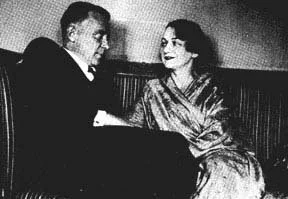
Although personally the book’s conclusion felt a little unsatisfying, which can be partially forgiven due to the need of a ‘Soviet victory’ within the narrative, what was most striking was the love the book had. The novel is typically known as Bulgakov’s ‘Sunset Novel’, writing in deteriorating health and deteriorating confidence, with his work censored and his time as a theatre manager ending in disappointment. To separate then the personal life of Bulgakov, and the characters of the novel, feels almost impossible, from the despairing poet to the disgraced theatre workers. It is no stretch to even say the Master and the Margarita reflect Bulgakov and his wife Elena, the despairing writer, and the preserver, with Elena able to get the book published in the 1960s. Therefore, the joy of the novel, the liberty taken and the boldness in new form (with its strikingly post-modern idea) allows the reader to be encapsulated in a joyful story full of magic whilst still being so grounded. There must be something in a defiant embracement of identity against the pressure of the modern day, as for Bulgakov it seems the only route to the enrichment of our souls.